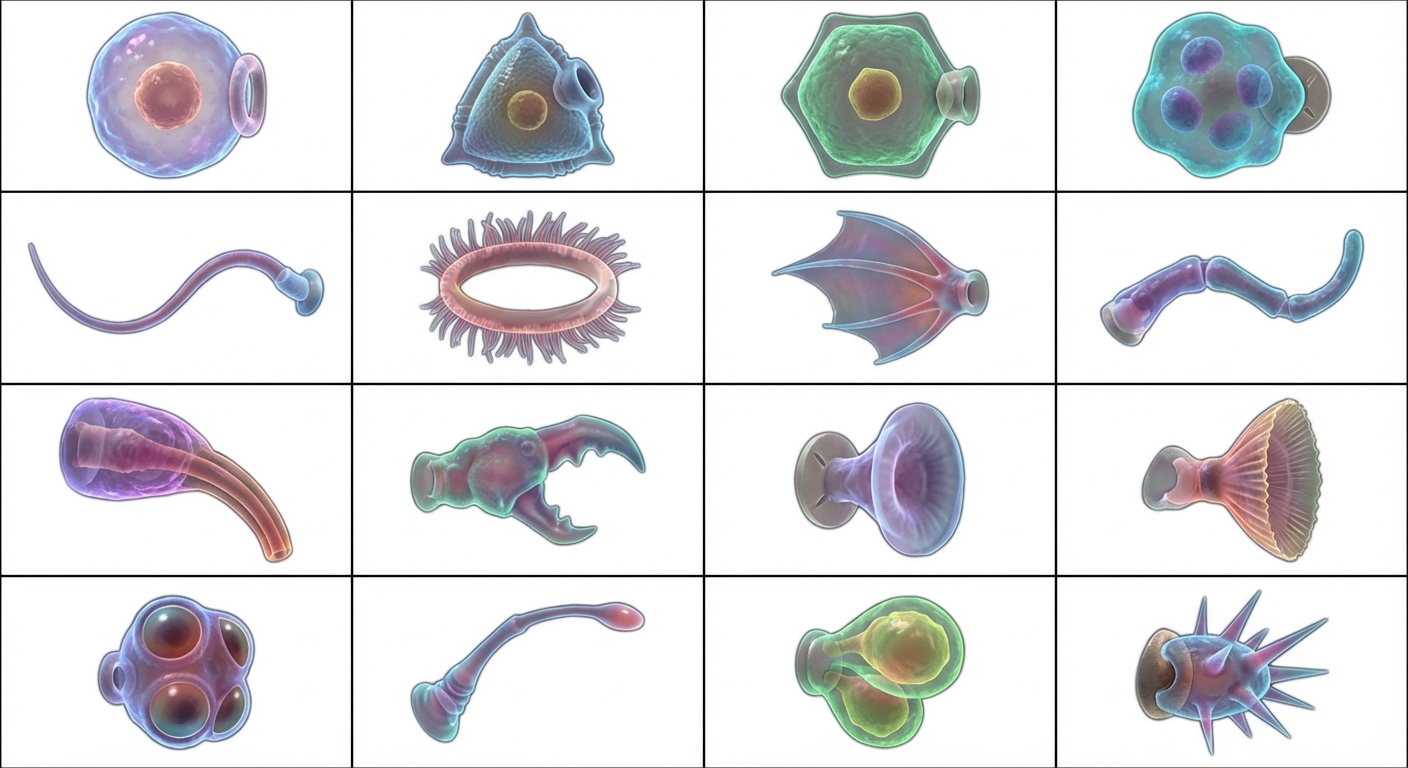
Generate a set of modular microorganism body-part sprites designed for a procedural evolution simulator where creatures are assembled from interchangeable biological components.

ART STYLE
Stylized microscopic life inspired by microscope photography, sci-fi biology, and games like Spore. Organic, colorful, semi-transparent membranes with soft glowing edges and subtle biological textures. Slightly cartoony but believable, visually readable at small scale.

VIEW
Top-down view. Each sprite centered in the image. Designed so parts can be rotated and attached to a central organism body.

SPRITE REQUIREMENTS
• transparent background
• centered pivot
• consistent lighting across all sprites
• no shadows outside the sprite
• minimal empty space so sprites pack well into a texture atlas
• consistent scale across all sprites
• designed to connect to other parts through visible organic attachment points

ATTACHMENT DESIGN
Every part should include a visible biological connector where it would attach to another part or to the organism’s core body.

Connector examples:
• membrane joint
• organic socket
• soft tissue ring
• cartilage connector
• circular anchor pad

These connectors should be visually clear so the sprites can be assembled procedurally by a game engine.

SPRITE SIZE
512 x 512 pixels
transparent background

ATLAS FRIENDLY
Sprites should be tightly framed with minimal empty space so they can be packed efficiently into a sprite atlas for use in WebGL or BabylonJS.

GENERATE MULTIPLE PART CATEGORIES

1. CELL BODY CORES
Main organism bodies that other parts attach to.

Examples:
round jelly cell
triangular armored cell
hexagonal cell
multi-nucleus blob
spiky membrane cell
thick shell cell
elongated amoeba cell
soft gelatin cell
segmented cell
crystalline alien cell

2. LOCOMOTION APPENDAGES
Parts used for movement.

Examples:
long flagella
short flagella
multiple flagella cluster
cilia ring
tentacle legs
membrane fins
pseudo-legs
whip tail
multi-joint tentacle
swimming fins

3. FEEDING / MANIPULATION APPENDAGES

Examples:
feeding proboscis
grabbing claw
micro pincers
suction tube
split tentacle
suction pad
hook appendage
filter feeding fan

4. SENSORY ORGANS

Examples:
eye cluster
antenna
chemical receptor node
glowing sensory bulb
heat sensor
magnetic sensor
vibration sensor
light detecting eye stalk

5. DEFENSIVE STRUCTURES

Examples:
spikes
toxin sacs
shell plates
armor ridges
venom gland
electric discharge node
defensive barbs
protective crystal shell

VISUAL DETAILS
• vibrant microscopic colors
• glowing membranes
• organic textures
• soft shading
• subtle translucency
• readable silhouettes
• believable biological design

VARIANTS
Each type of appendage should have multiple mutation variants such as:
short
long
thick
thin
split
clustered
armored
spiked

OUTPUT
Generate approximately 16 unique sprites for each category while keeping a consistent art style across all sprites so they can be mixed and matched when constructing procedural organisms.

Generated Sprite Artwork

"Generate a set of modular microorganism body-part sprites designed for a procedural evolution simulator where creatures are assembled from interchangeable biological components. ART STYLE Stylized microscopic life inspired by microscope photography, sci-fi biology, and games like Spore. Organic, colorful, semi-transparent membranes with soft glowing edges and subtle biological textures. Slightly cartoony but believable, visually readable at small scale. VIEW Top-down view. Each sprite centered in the image. Designed so parts can be rotated and attached to a central organism body. SPRITE REQUIREMENTS • transparent background • centered pivot • consistent lighting across all sprites • no shadows outside the sprite • minimal empty space so sprites pack well into a texture atlas • consistent scale across all sprites • designed to connect to other parts through visible organic attachment points ATTACHMENT DESIGN Every part should include a visible biological connector where it would attach to another part or to the organism’s core body. Connector examples: • membrane joint • organic socket • soft tissue ring • cartilage connector • circular anchor pad These connectors should be visually clear so the sprites can be assembled procedurally by a game engine. SPRITE SIZE 512 x 512 pixels transparent background ATLAS FRIENDLY Sprites should be tightly framed with minimal empty space so they can be packed efficiently into a sprite atlas for use in WebGL or BabylonJS. GENERATE MULTIPLE PART CATEGORIES 1. CELL BODY CORES Main organism bodies that other parts attach to. Examples: round jelly cell triangular armored cell hexagonal cell multi-nucleus blob spiky membrane cell thick shell cell elongated amoeba cell soft gelatin cell segmented cell crystalline alien cell 2. LOCOMOTION APPENDAGES Parts used for movement. Examples: long flagella short flagella multiple flagella cluster cilia ring tentacle legs membrane fins pseudo-legs whip tail multi-joint tentacle swimming fins 3. FEEDING / MANIPULATION APPENDAGES Examples: feeding proboscis grabbing claw micro pincers suction tube split tentacle suction pad hook appendage filter feeding fan 4. SENSORY ORGANS Examples: eye cluster antenna chemical receptor node glowing sensory bulb heat sensor magnetic sensor vibration sensor light detecting eye stalk 5. DEFENSIVE STRUCTURES Examples: spikes toxin sacs shell plates armor ridges venom gland electric discharge node defensive barbs protective crystal shell VISUAL DETAILS • vibrant microscopic colors • glowing membranes • organic textures • soft shading • subtle translucency • readable silhouettes • believable biological design VARIANTS Each type of appendage should have multiple mutation variants such as: short long thick thin split clustered armored spiked OUTPUT Generate approximately 16 unique sprites for each category while keeping a consistent art style across all sprites so they can be mixed and matched when constructing procedural organisms."

Sprite ArtAI GeneratedGame Asset